Made in KG (2014)
Sound installation, sculpture: Aluminum, compressed metal, abacus
The work reflects on the post-Soviet economic transformation of an independent country not as a process of modernization, but as a form of internal colonization and structural dismantling. Within the framework of privatization reforms, industrial infrastructure, facilities, and equipment created through collective labor were extracted from their local economic context and incorporated into export-oriented accumulation chains as secondary raw materials. Factories and equipment were transformed into commodities and largely exported as scrap metal, primarily to China. Economic “development” in this logic occurred through destruction, benefiting a narrow circle of people while depriving thousands of skilled specialists of their professions.
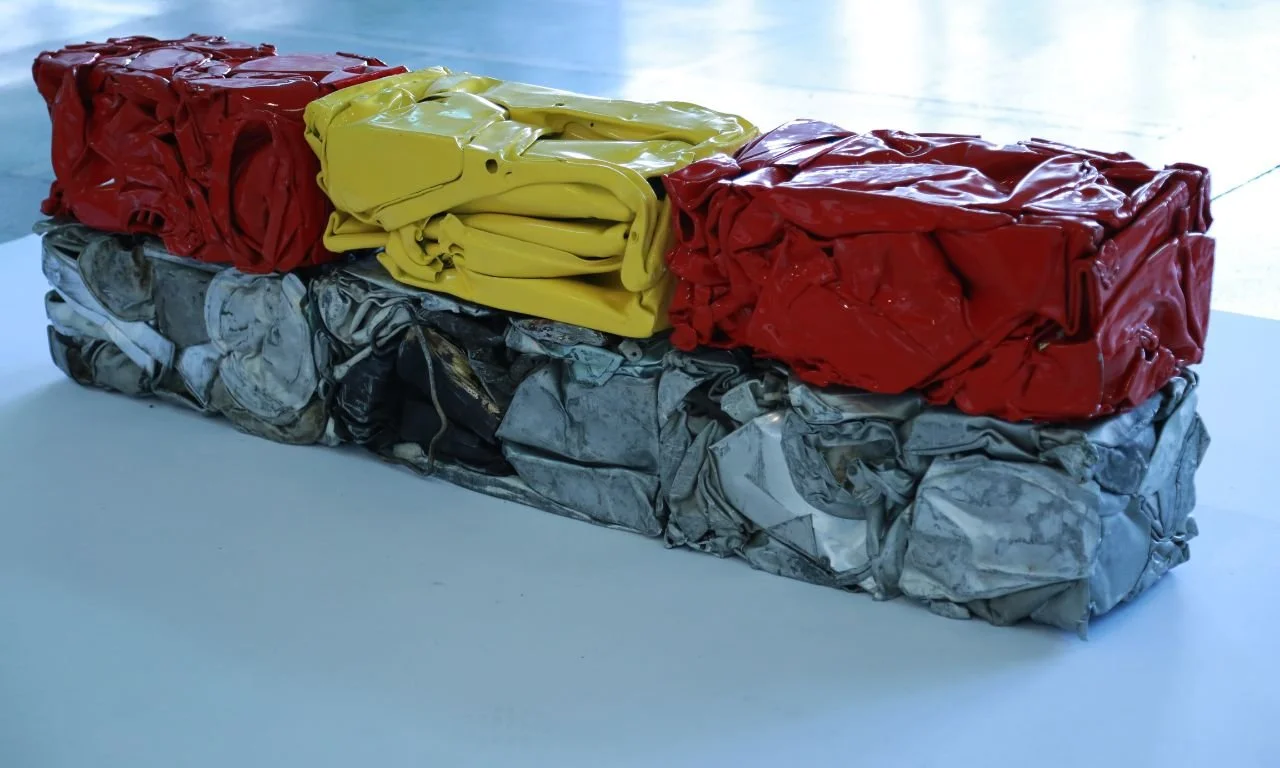
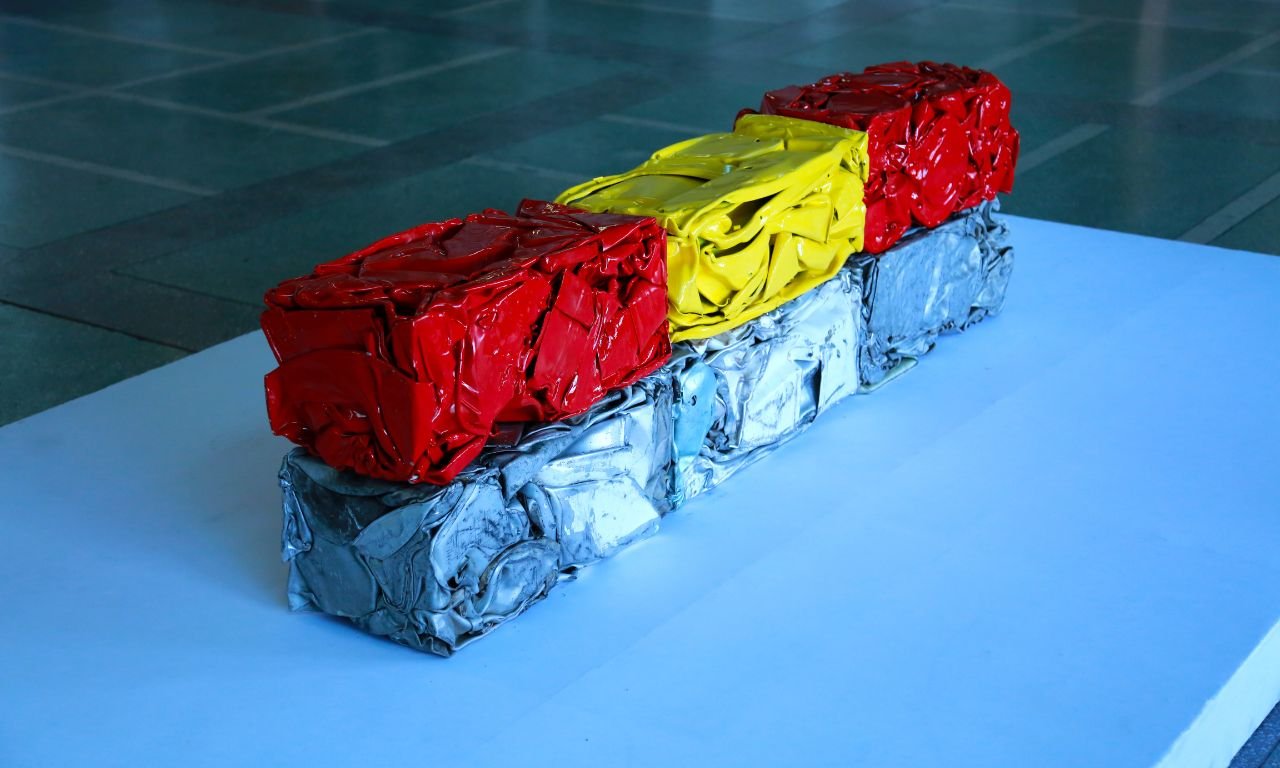
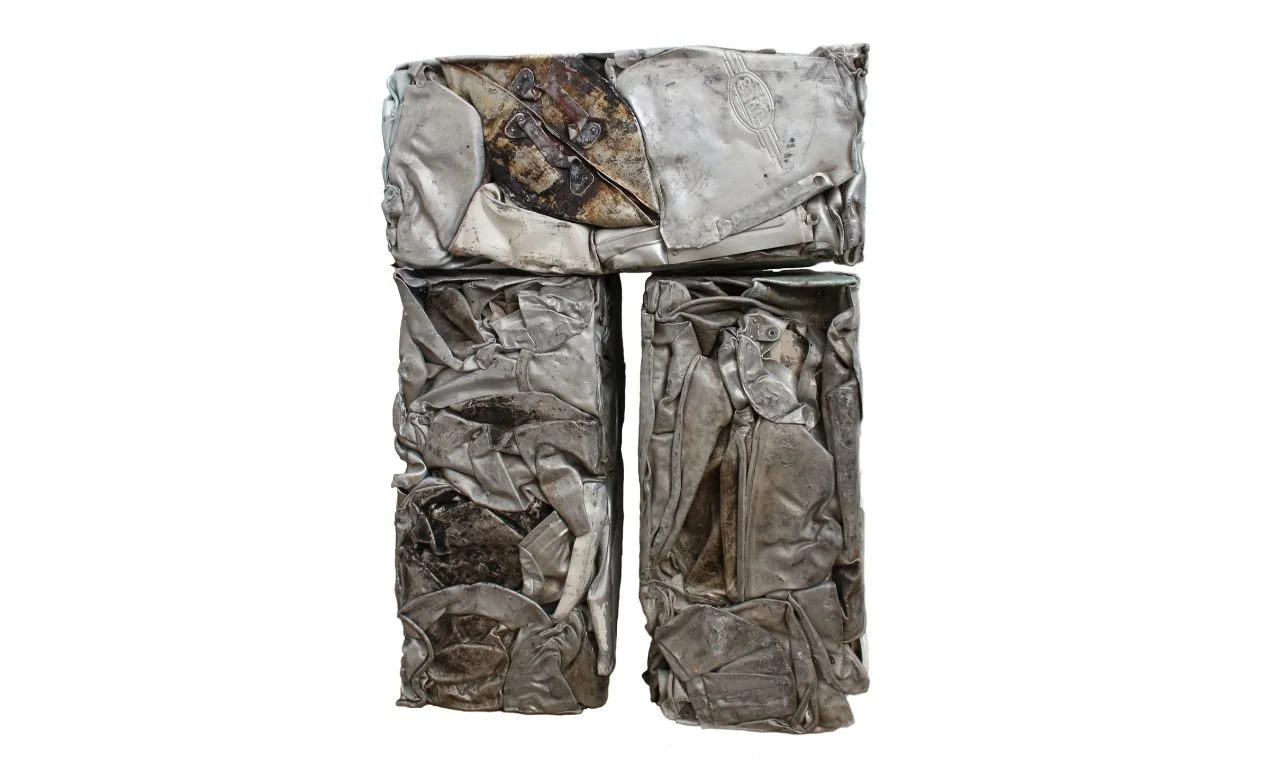
The sculpture is constructed from compressed industrial metal — fragments of equipment that have lost functionality, context, and social significance in their country of origin. The colors of the national flag highlight the material’s provenance and turn the inscription “Made in KG” into an ironic marker: the product was formally created here, but has lost its connection to national sovereignty and public interest. National identity is reduced to a label of origin, while political and economic decisions are made outside the logic of collective welfare. This gesture evokes postcolonial critiques of peripheral economies integrated into the global market, primarily as sources of raw materials and as destinations for resource outflows.
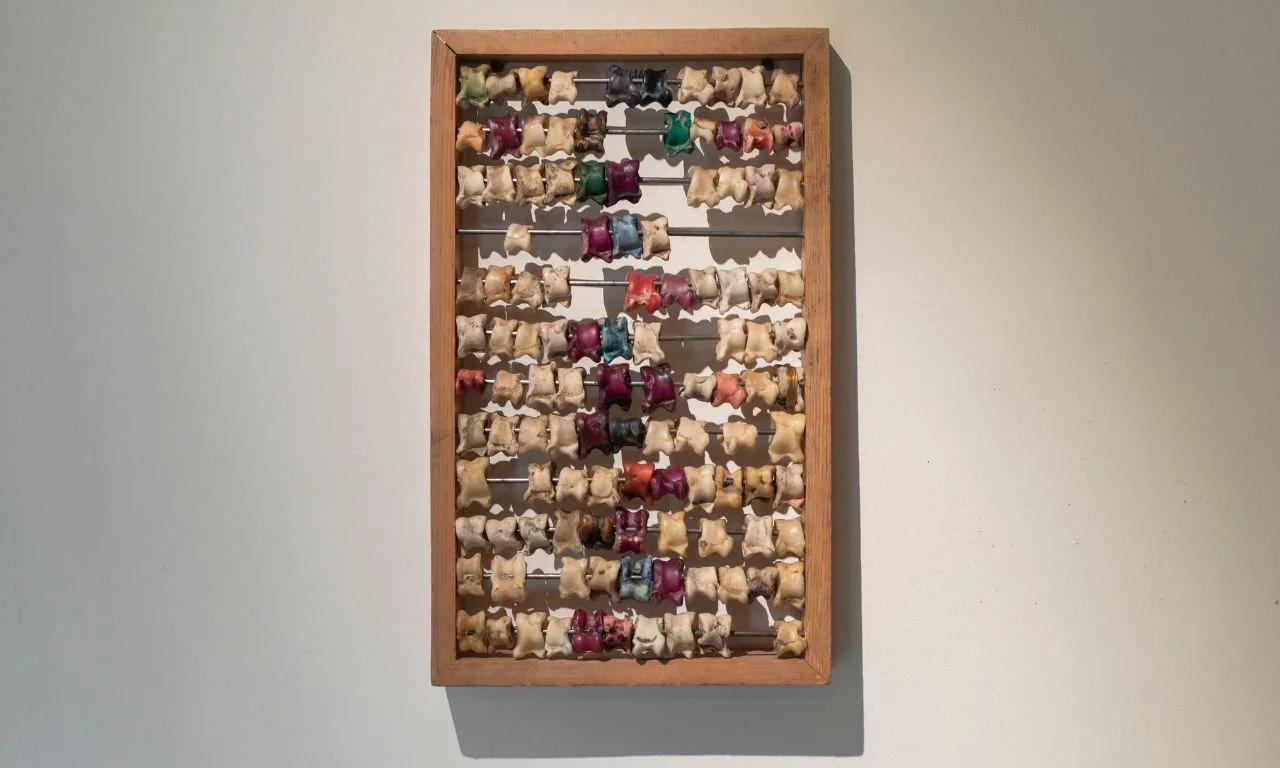
The abacus references the tools of rationalization and accounting in the planned economy. Replacing wooden beads with sheep bones shifts the act of calculation from the domain of economic accounting to the realm of ritual sacrifice. Accounting here no longer produces value; it records losses—the outflow of national resources, knowledge, infrastructure, and human capital. The sound component captures the process's cyclicality and monotony, transforming the abacus into an acoustic trace of structural violence and underscoring the impossibility of accumulation. Made in KG presents a critical study of a development model in which the country’s future is exported as raw material, leaving only the noise of a lost production system.